Tune details
Music: Hoagy Carmichael
Words: Mitchell Parish (1929 lyrics)
Published / composed / adapted — see history: 1927
Original key: Not established
Study level: Intermediate; advanced where the inherited roadmap needs reconstruction
 Djangopedia
A lyrical standard whose refrain begins on the subdominant rather than the tonic. Long melodic arcs and rich cadences make patient voice leading more valuable than constant activity.
Preserve the long melody across the opening cadence.
Owner content reviewed — 2026-10-05T18:25:54Z by admin. Coverage measures presence, not accuracy. Content review does not certify rights or musical perfection.
Django recordings for this tune. Uploader dates and take labels remain source claims; only an evidenced exact association enables a row’s Listen control.
Uploader identifies this as Django Reinhardt’s performance; recording date and take require comparison with the discography.
| Entry | Year | Recording / session / release evidence | Listen |
|---|---|---|---|
| 01 | 1935 | Stardust, 2/3/35, OLA 349-1 ,"Fremeaux FA 302, JSP 344, Conifer CDHD 230, EMI Jazz Time 790560-2"," - Paris - Coleman Hawkins (ts), Stephane Grappelly (p), Django Reinhardt (g), Eugene d'Hellemmes (b), Maurice Chaillou (d)." | — |
| 02 | 1935 | Stardust, 25/11/35, OLA 731-1 ,"Fremeaux FA 304, Classics 739"," - Garnet Clark (p), Bill Coleman (tpt&vo), George Johnson (cl&as), Django Reinhardt (g), June Cole (b)" | — |
A dash means no video has been associated with this exact historical recording. Tune-level listening resources remain available above.
Stardust is credited here to Hoagy Carmichael. The source date is 1927; publication, composition and later lyric adaptations may have separate dates. The inherited archive lists 2 recording entries, with dated entries spanning 1935–1935. These are archive rows, not a claim that every entry is a distinct released take. The linked recording rows preserve the original discographical wording. Compare their dates, matrices and personnel when choosing a performance to study.
Music: Hoagy Carmichael
Words: Mitchell Parish (1929 lyrics)
Published / composed / adapted — see history: 1927
Original key: Not established
Study level: Intermediate; advanced where the inherited roadmap needs reconstruction
Listening task: Learn the long refrain as a sung line before adding guitar ornaments; agree whether the verse is included. Mark the key, pickup, phrase lengths and ending before comparing another version.
Stardust, 2/3/35, OLA 349-1 ,"Fremeaux FA 302, JSP 344, Conifer CDHD 230, EMI Jazz Time 790560-2"," - Paris - Coleman Hawkins (ts), Stephane Grappelly (p), Django Reinhardt (g), Eugene d'Hellemmes (b), Maurice Chaillou (d)."
Compare the first and last listed entries for tempo, instrumentation and arrangement. Do not infer identical takes from a shared title. Preserve the long melody across the opening cadence.
Stardust, 25/11/35, OLA 731-1 ,"Fremeaux FA 304, Classics 739"," - Garnet Clark (p), Bill Coleman (tpt&vo), George Johnson (cl&as), Django Reinhardt (g), June Cole (b)"
Count the form and check this arrangement’s key before joining in. The current preferred track is shown in Play along.
F6/9–Fm7–B♭7 reaches C6. A7 leads toward Dm, and D7–G7 extends the cadence. The last phrase revisits the minor-subdominant route before settling on C.
Chord symbols and source cell divisions are preserved from Djangopedia. Slashes mark rhythm; 0 is inherited diminished notation whose exact voicing should be checked against the melody. This is a chord reference, not a melody transcription.
| F69/// | F69/// | Fm7/// | Bb7/// | C6/// | A7/// | Dm/ A7/ | Dm/// |

| G7/ F#7/ | G7/// | C6/// | C6/// | D7/// | D7/// | G7/ F#7/ | G7/ G7+/ |

| F69/// | F69/// | Fm7/// | Bb7/// | C6/// | A7/// | Dm/ A7/ | Dm/// |

| Fm7/// | Bb7/// | C6/// | A7/// | Dm7/// | G7b9/// | C69/ Fm7/ | C69/// :||
Original source ↗
Guitare Improvisation · 90 BPM · 6:05 · Owner requested 2026-10-05; watch-page identity, title and positive-duration availability checked.
Owner-selected backing track.
Performed studies, transcriptions, TAB, notation and lessons for studying Django’s solo. Resources are described by their creator; inclusion does not certify note-for-note accuracy.
Eric Tseng · source-described; accuracy not independently verified
Creator presents a study of Django’s recorded solo. Use it alongside the original recording; exact transcription accuracy has not been independently reviewed.
Checked 2026-10-02
Follow a shared key, a harmonic idea or a familiar form. Keys refer to this site’s chart editions; other recordings may use a different key.
No sufficiently supported harmonic comparison has been added yet.
Showing 8 of 20 matches. Explore the full catalogue →
Showing 8 of 12 matches. Explore the full catalogue →
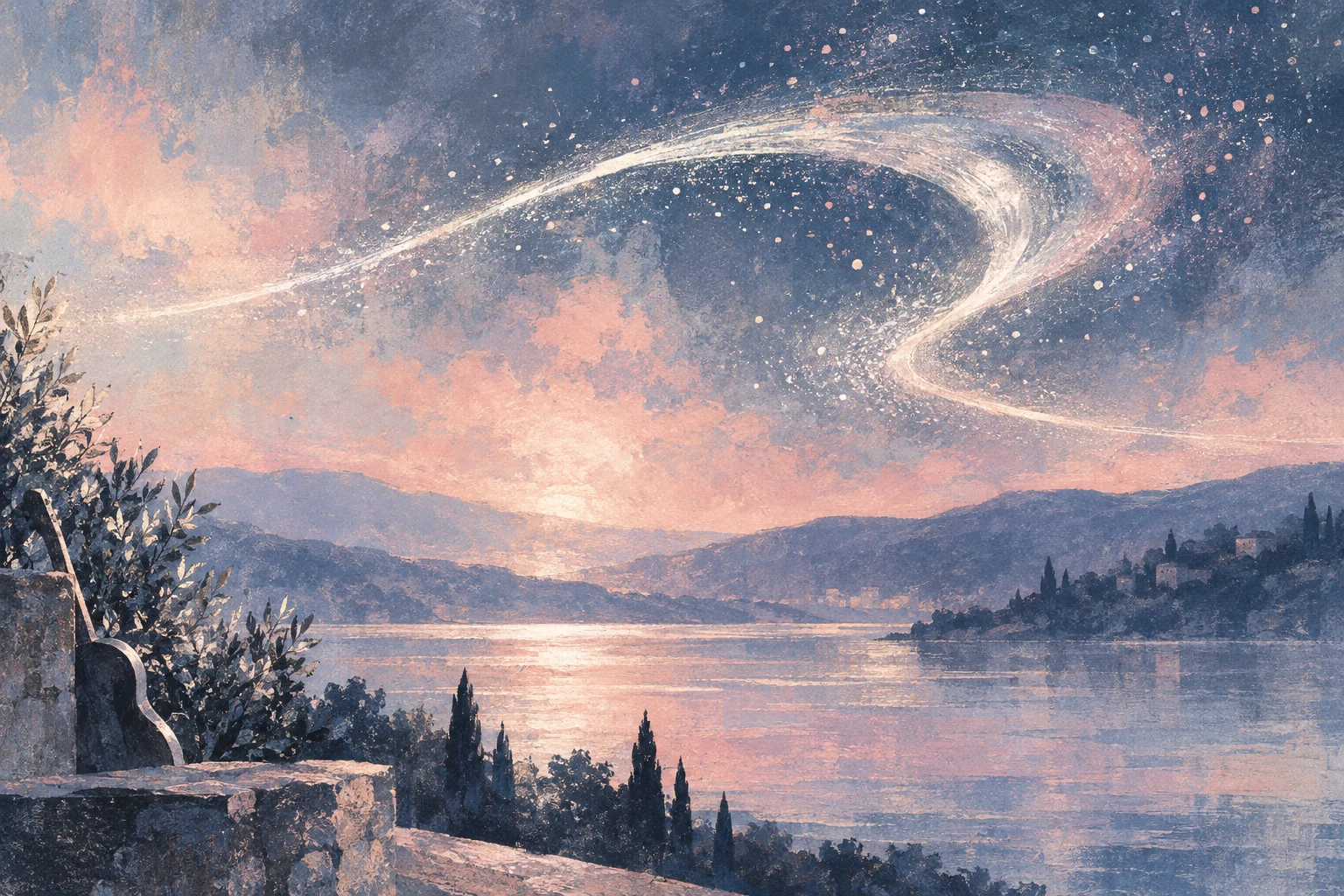
A patient luminous curved trace crosses a fine sparse field of pale dust and briefly widens into a second arc before returning. Long lyrical cadence and subdominant departure become suspended stardust; a small understated guitar-outline fragment keeps musical context.
An original editorial interpretation of the tune. This is an illustration, not an archival photograph or a documented reconstruction of a recording session.
Original Djangopedia illustration · AI-assisted, 2026
Illustration credits & provenance →Selected performances by notable Gypsy Jazz players and ensembles. Inclusion is editorial and does not imply an objective popularity ranking.
Fapy Lafertin, Tim Kliphuis · Pimp the Pop
2003 · 11th Django Reinhardt Memorial, Augsburg; April 2003
Guitar/violin concert reading; multi-angle source footage.
If playback is unavailable, use the source link.
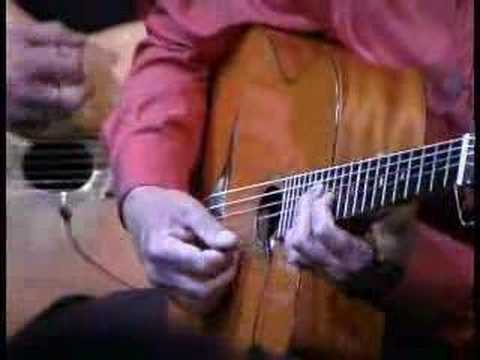 Fapy Lafertin & Tim Kliphuis - StardustFapy Lafertin, Tim Kliphuis · Pimp the Pop2003 · 11th Django Reinhardt Memorial, Augsburg; April 2003Guitar/violin concert reading; multi-angle source footage.✓ Featured
 Duved Dunayevsky - Stardust (Trad Jazz)Duved Dunayevsky, Zak Martel, Denis Chang · Denis Chang2018 · Montreal; November 2018Guitar-led vintage swing trio; source explicitly tags Gypsy Jazz.Select performance
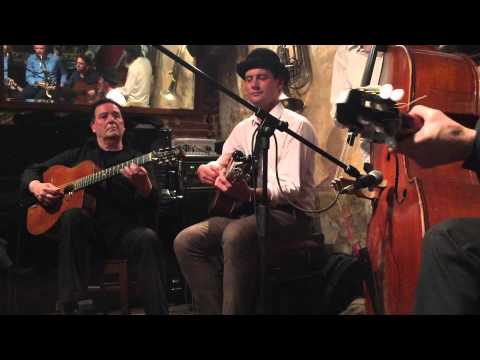 Stardust - Fapy Lafertin, Russell Welch, Tom CallensFapy Lafertin, Russell Welch, Tom Callens, Waso and Dajo De Cauter · Russell Welch Guitar2015 · Hot Club de Gand, Ghent; 14 April 2015Live guitar/saxophone ensemble contrasts violin-led reading.Select performance
 Frank Vignola Group plays stardustFrank Vignola, Aaron Weinstein, Vinny Raniolo, Gary Mazzaroppi · Vinny RanioloGuitar and violin quartetAcoustic swing crossover with established Gypsy Jazz guitar performers.Select performance
 Stardust, Hot Club du NordEmma Fisk’s Hot Club du Nord · Emma Fisk Jazz Violin2025 · Old Black Cat Jazz Club, Sunderland Minster; 17 October 2025Violin, two guitars and bass; date and personnel stated by group.Select performance
 Stardust - Dan CassidyDan Cassidy, Jóhann Guðmundsson · Matthías StefánssonViolin and guitar filmed performanceViolin/guitar duet; source supplies film credits but no performance date.Select performance
 StardustPaper Moon Gypsy JazzVocal Gypsy Jazz readingGroup and composer/lyricist identified by uploader; no performance date inferred.Select performance
Play the opening with only melody and bass, then add one inner voice. Record a chorus with no fills during held melody notes and assess the phrase shape.
Use spacious voicings beneath long melody notes. Keep chromatic dominant approaches soft enough that the melody remains the main event.
Start around 60–90 bpm and preserve the full phrase
Play the opening with only melody and bass, then add one inner voice. Record a chorus with no fills during held melody notes and assess the phrase shape.
Begin with four quarter-note clicks. Halve the click rate and hear beats 2 and 4 while maintaining the same phrase lengths.
Stardust — C major; 32-bar refrain in the inherited chart; verse is separate. Agree the pickup, tempo and ending before counting in.
32-bar refrain in the inherited chart; verse is separate. Keep the head and solo chorus lengths explicit at the count-in.
Start with melody and bass only. Add the following colour without interrupting the melody: Hear A–A♭–G through the opening F–Fm–C colours.
Use spacious voicings beneath long melody notes. Keep chromatic dominant approaches soft enough that the melody remains the main event. Agree the full roadmap and signal the last head before it starts.
Choose a comfortable vocal key and transpose the whole arrangement, including its introduction and ending.
This player guide combines inherited recording evidence and editorial study notes. Musical study notes are editorial suggestions; compare them with the recording.
Djangopedia — inherited chart and recording rows ↗
Composition credits and background ↗
Current preferred backing track — Stardust (90 bpm) - Gypsy jazz Backing track / Jazz manouche ↗
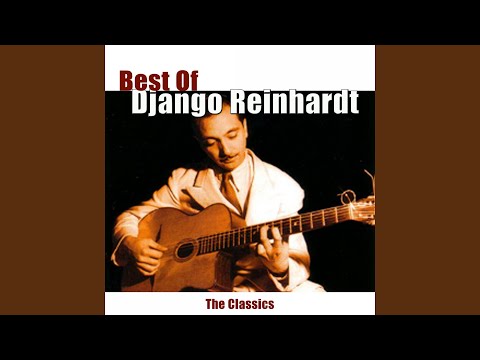
Feature photograph — source collection ↗
Original Djangopedia illustration · AI-assisted, 2026
An original editorial interpretation of the tune. This is an illustration, not an archival photograph or a documented reconstruction of a recording session.
Generated with the native image-generation tool on 2026-10-08; original editorial artwork, not a historical photograph.
Prompt: Use case: illustration-story. One original editorial feature illustration for Djangopedia's guide “Stardust”. Landscape 1536 × 1024, opaque background. Scene: A patient luminous curved trace crosses a fine sparse field of pale dust and briefly widens into a second arc before returning. Long lyrical cadence and subdominant departure become suspended stardust; a small understated guitar-outline fragment keeps musical context. Musical basis from the guide: A lyrical standard whose refrain begins on the subdominant rather than the tonic. Long melodic arcs and rich cadences make patient voice leading more valuable than constant activity. The supplied chart is C major; form: 32-bar refrain in the inherited chart; verse is separate; feel: Ballad / gentle swing. These describe musical inspiration, not visible writing. Historical context: Stardust is credited here to Hoagy Carmichael. The source date is 1927; publication, composition and later lyric adaptations may have separate dates. Do not illustrate disputed historical claims or suggest this imagined scene is an archival session. Medium: monotype. Dominant palette: silver pale rose and restrained indigo. Composition: long luminous trace through granular field. Human presence: none. Strong intentional design, clearly drawn/painted, distinctive material marks; keep essential subject safely within the central 70 percent width and middle 80 percent height for card crops. Maintain enough visual substance at thumbnail size. Broad inspiration observed in old photo, ONLY scale/rhythm and never a reference image: outdoor paired figures; broad light ground; relaxed distance. Independently invent every pose, perspective, clothing, setting and lighting. Avoid: No astronomy photo, large centered star, musicians copied from source. No photorealism, archival simulation, generated text, letters, numbers, labels, fake musical notation, logo, signature, watermark, fake dates, yellowed-paper patina, recognizable artwork or copied photograph. No imitation of any named artist. Render the art edge to edge without borders, mockup or typography. Batch B diversity compensation: make light and midtone areas substantial; avoid near-black dominant backdrops, violet monochrome, empty chair/stool/bench compositions, repeated sunset terraces and generic cloud panoramas. Preserve the stated tune-specific scene. Human figures remain standing or peripheral except an explicitly named ensemble; no centered seated Django portrait. For graphic images use clearly plain colour shapes, no ruled parallel staffs, circles with stems, note-like marks or typography.
Photograph provenance and rights are stated separately. Attribution does not establish permission.